
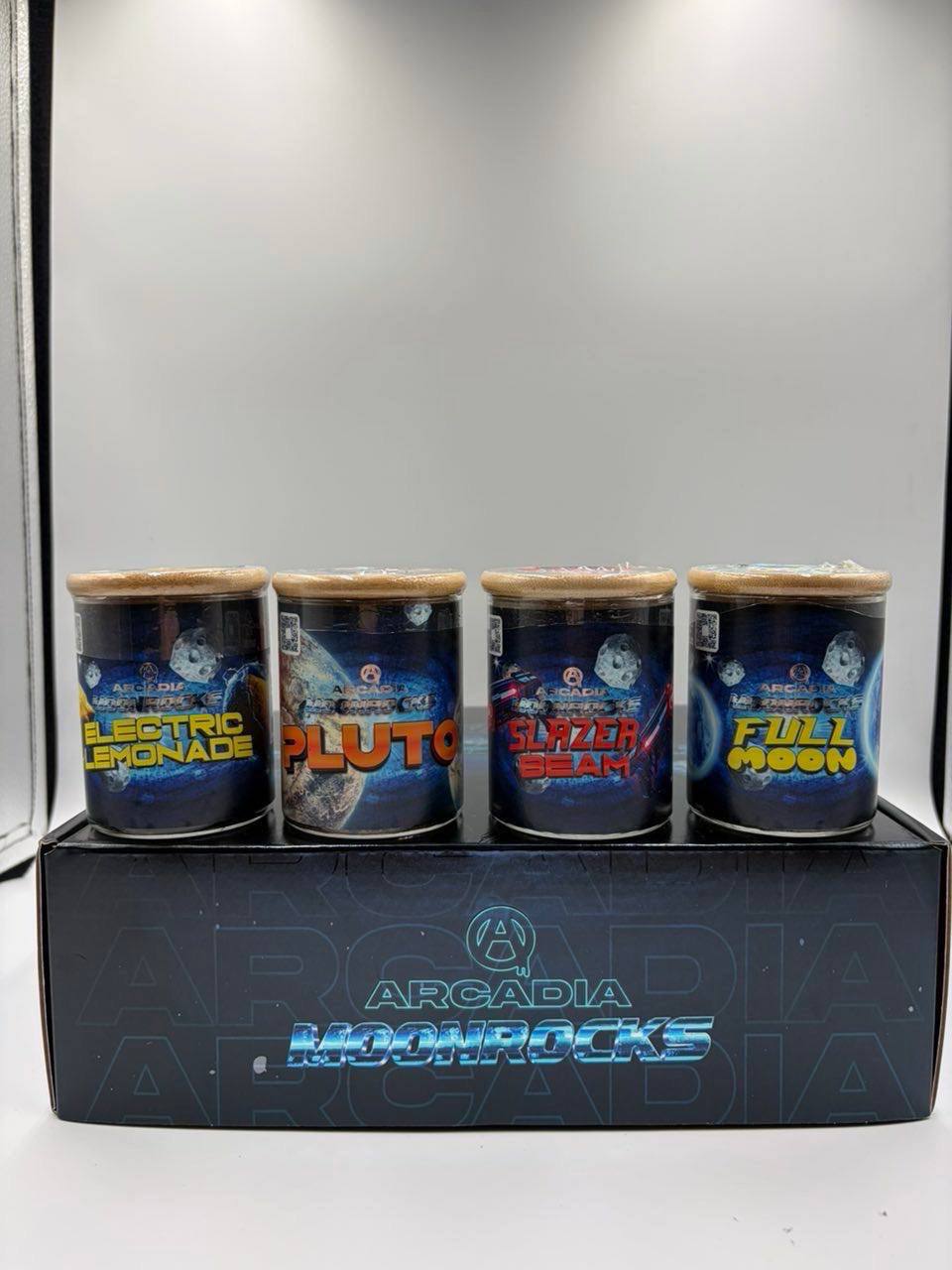
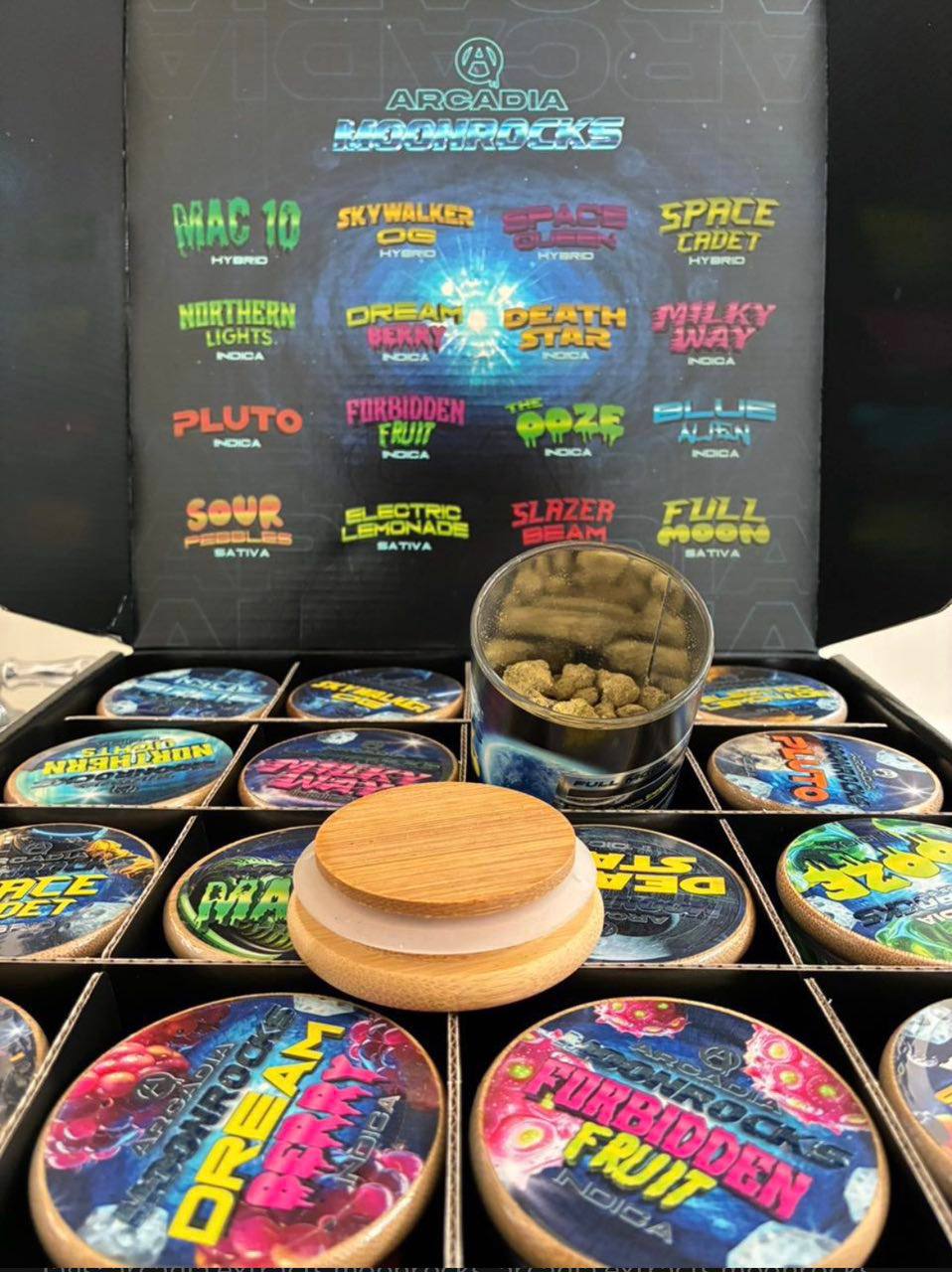
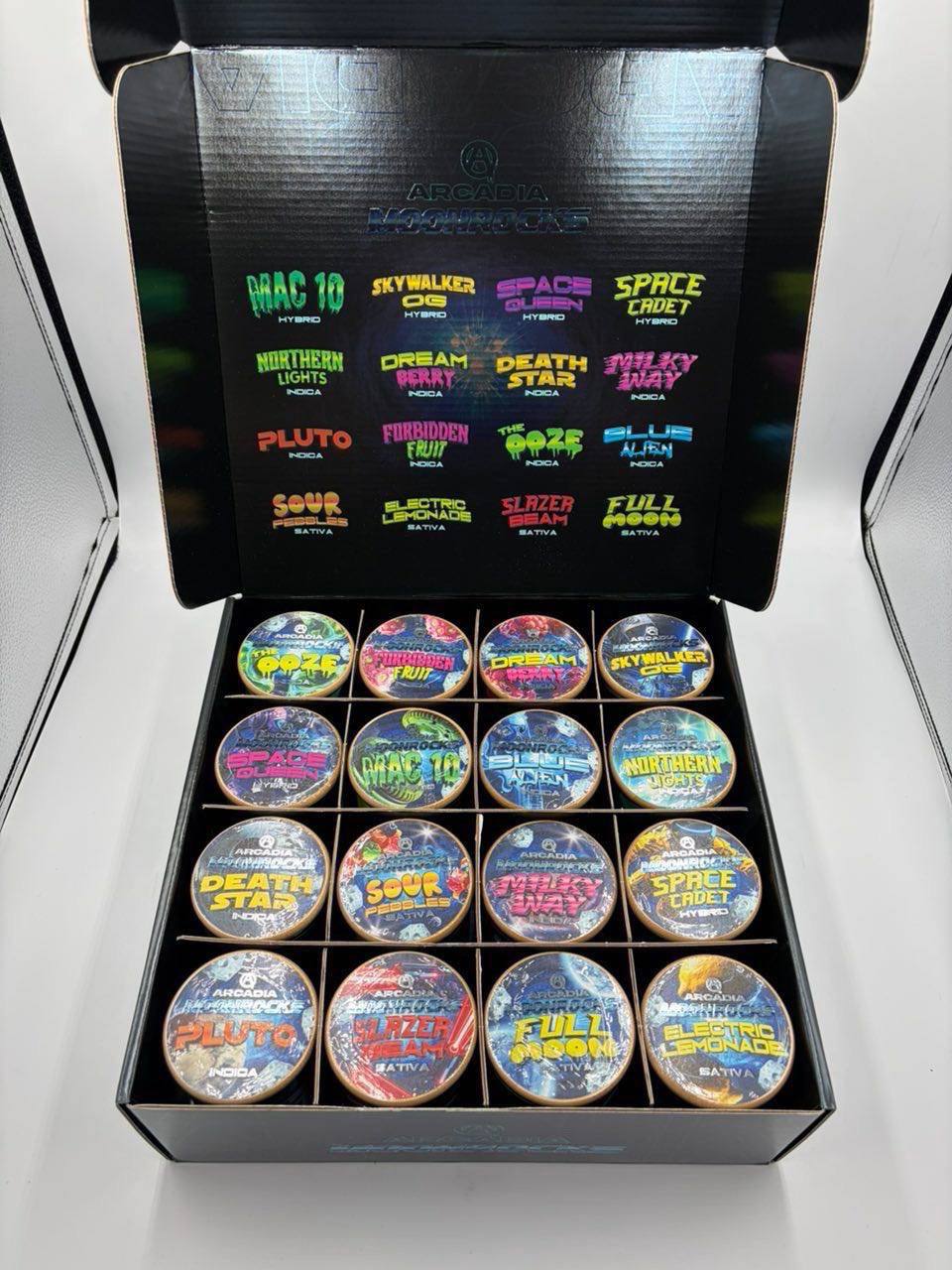



Arcadia Moonrocks Premium-Style Overview and Product Description
Introduction to Arcadia Moonrocks
Arcadia Moonrocks are presented as a high-intensity cannabis product known for their layered structure and rich composition. They are typically made by combining a dense cannabis bud with concentrated extract and a coating of fine kief. As a result, a multi-layered experience is created, often described as more potent than standard flower forms.
Within modern cannabis culture, moonrocks are considered a specialty item rather than an everyday option. Moreover, Arcadia Moonrocks are often positioned as a refined version of this category, with emphasis placed on consistency, texture, and aromatic depth. In addition, attention is frequently given to the balance between potency and flavor preservation.
However, despite their popularity in niche markets, moonrocks are not uniform across producers. Therefore, Arcadia Moonrocks are usually described in terms of their craftsmanship approach rather than a single fixed formula.
Product Composition and Structure
Arcadia Moonrocks are generally built through a layered infusion method. First, a selected cannabis bud is prepared as the base. Then, it is coated with a sticky concentrate. Finally, the outer layer is rolled in kief, creating a textured and dense product.
Moreover, each layer contributes differently to the overall profile. The bud provides structure, the concentrate enhances richness, and the kief adds a powdered resin finish. As a result, a complex physical and aromatic structure is formed.
Additionally, the layering process is often controlled to maintain consistency. In many cases, each batch is curated so that coating is evenly distributed. Therefore, the final product appears more uniform in texture and appearance.
However, variations can still occur due to natural differences in plant material. Consequently, slight shifts in density, aroma, or surface coating may be observed between batches.
Aroma and Flavor Profile
Arcadia Moonrocks are often associated with strong aromatic notes. Typically, earthy undertones are combined with sweet, herbal, or sometimes citrus-like hints depending on the strain base used. Moreover, the added concentrate can intensify the scent profile significantly.
In addition, the kief coating contributes a dry, resin-rich aroma that blends with the underlying bud structure. As a result, a layered fragrance profile is created that evolves over time.
However, the intensity of aroma may vary depending on storage conditions and ingredient ratios. Therefore, freshness plays an important role in preserving the intended scent characteristics.
Furthermore, when the product is broken apart, the internal aroma is often released more strongly. This transition from surface scent to internal profile is one of the defining traits of moonrock-style products.
Texture and Physical Characteristics
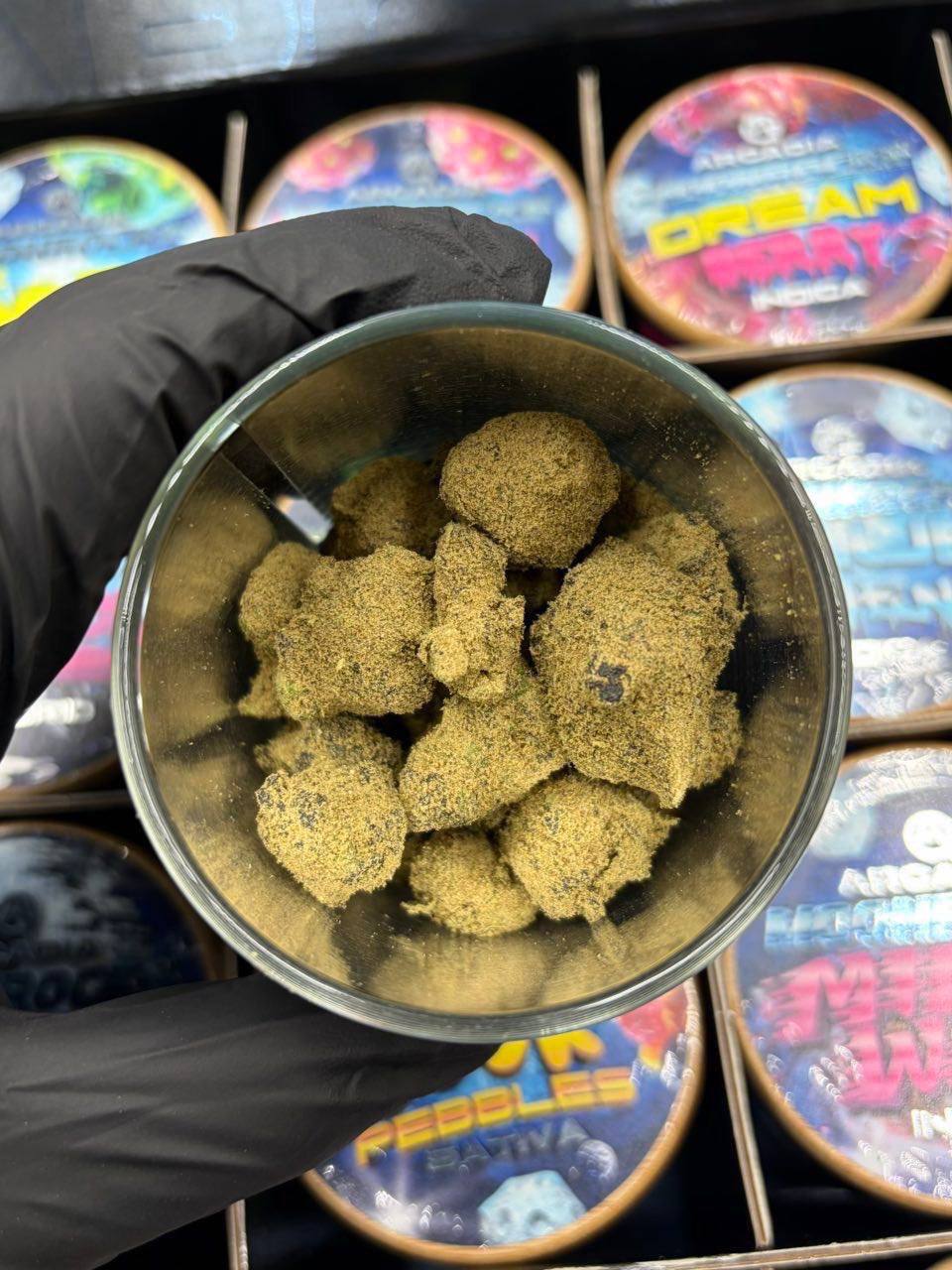
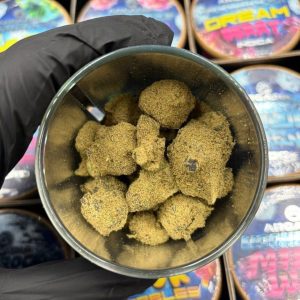
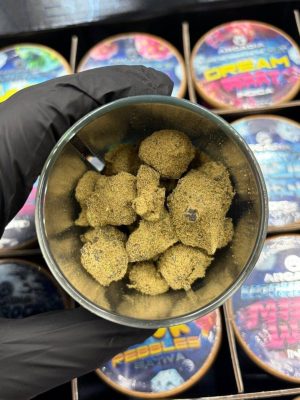
Arcadia Moonrocks are typically dense and compact. The outer kief layer gives them a slightly rough and powdery texture, while the concentrate layer adds stickiness beneath the surface.
Moreover, the internal bud remains firm but slightly softened due to infusion. As a result, the product does not resemble traditional dried flower in structure.
Additionally, handling requires care because the outer coating may crumble or shed fine particles. Therefore, the texture is often described as delicate despite the overall density.
However, this fragility is part of what defines the product category. Consequently, moonrocks are usually treated as specialty items rather than standard loose flower products.
Potency and Concentration Profile
Arcadia Moonrocks are generally considered highly concentrated due to their multi-layer construction. The combination of bud, concentrate, and kief naturally increases overall strength compared to uninfused flower.
Moreover, each layer contributes a different level of cannabinoid density. As a result, the product is often categorized within higher-strength segments of cannabis offerings.
In addition, the infusion process ensures that active compounds are distributed across multiple layers rather than remaining isolated in a single part. Therefore, a more uniform concentration profile is achieved.
However, potency perception can differ depending on tolerance levels and individual sensitivity. Consequently, experiences may vary widely even when the same batch is used.
Production Approach and Craftsmanship
Arcadia Moonrocks are often associated with careful production methods. First, selection of base material is typically prioritized for structure and aroma quality. Then, concentrates are applied in controlled amounts to ensure even coating.
Moreover, kief application is usually performed in a way that avoids excessive clumping. As a result, the final texture remains balanced rather than overly dense or uneven.
In addition, some production styles emphasize hand-finished techniques. Therefore, a more artisanal appearance may be achieved compared to mass-produced alternatives.
However, because of the complexity of layering, consistency can be challenging to maintain at scale. Consequently, quality control is often highlighted as a key factor in maintaining product identity.
Visual Appearance and Presentation
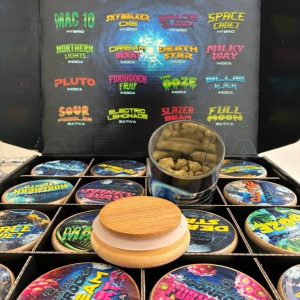
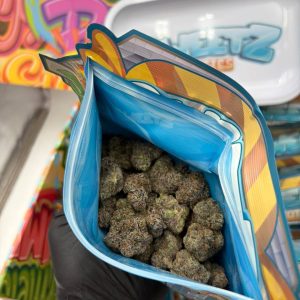
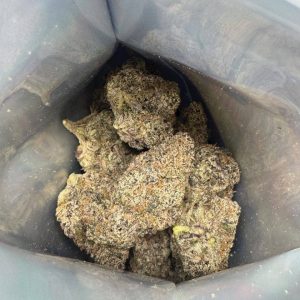
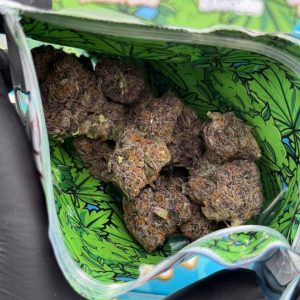
Arcadia Moonrocks are visually distinctive. Typically, they appear as small, rounded formations with a crystalline or dusty outer coating. Moreover, shades may vary depending on the strain and kief color.
In addition, the concentrate layer may be partially visible beneath the kief, giving a textured, multi-tonal look. As a result, the product often stands out compared to standard cannabis flower.
Furthermore, lighting conditions can influence how the surface appears, especially when resin content is high. Therefore, the visual impression may shift between matte and slightly glossy depending on angle and density.
However, the product is not designed for uniform appearance in the same way processed consumer goods might be. Consequently, natural variation is expected and often considered part of its identity.
Storage and Stability Considerations
Arcadia Moonrocks require careful storage to maintain their structure and aromatic profile. Typically, airtight containers are recommended to limit exposure to air and moisture.
Moreover, temperature stability plays an important role in preserving the concentrate layer. As a result, cooler environments are often preferred to prevent softening or degradation.
In addition, excessive handling can cause the outer kief layer to detach. Therefore, minimal disturbance is generally advised to maintain integrity.
However, even under optimal conditions, slight changes in texture may occur over time. Consequently, freshness is usually best preserved through controlled storage practices.
Sensory Experience Overview
The sensory profile of Arcadia Moonrocks is often described as layered and evolving. Initially, the outer aroma is detected first, followed by deeper internal notes once the structure is broken apart.
Moreover, the texture contributes to the overall perception, adding a tactile dimension to the experience. As a result, multiple sensory elements are engaged simultaneously.
In addition, the combination of resin, bud, and kief creates a blended aromatic release pattern. Therefore, the profile may feel more complex compared to single-component cannabis products.
However, perception varies significantly between individuals. Consequently, the same product may be interpreted differently depending on familiarity and expectation.
Market Position and Product Identity
Arcadia Moonrocks are generally positioned within the premium or specialty segment of cannabis-style products. Moreover, they are often marketed as enhanced or upgraded versions of traditional flower.
In addition, emphasis is frequently placed on craftsmanship, layering technique, and overall intensity. As a result, they tend to appeal to users seeking concentrated and complex formats.
However, they are not typically considered entry-level products. Therefore, they are more commonly associated with experienced consumers or niche interest groups.
Furthermore, branding often focuses on uniqueness rather than mass accessibility. Consequently, Arcadia Moonrocks are usually described as distinctive rather than standardized.
Comparison with Standard Flower Products
Compared to regular cannabis flower, Arcadia Moonrocks differ in structure, density, and composition. Standard flower remains single-layered, while moonrocks integrate multiple infused elements.
Moreover, the presence of concentrate and kief significantly alters both texture and aroma release patterns. As a result, moonrocks tend to feel more complex in both physical and sensory terms.
In addition, standard flower generally offers more uniform handling characteristics. Therefore, moonrocks require more careful manipulation due to their delicate outer coating.
However, both product types share a common botanical origin. Consequently, they remain part of the same broader category despite structural differences.
Usage Context and General Handling Notes
Arcadia Moonrocks are typically handled with care due to their dense and coated structure. Moreover, they may be broken apart rather than processed in large sections to preserve consistency.
In addition, the sticky nature of the concentrate layer means that tools or gloves are sometimes used to reduce residue transfer. As a result, handling remains more specialized than with standard flower.
However, over-manipulation can reduce visual integrity and cause loss of kief coating. Therefore, minimal direct contact is generally preferred.
Furthermore, storage and handling practices often influence final presentation quality. Consequently, proper care contributes significantly to maintaining overall product condition.
Arcadia Moonrocks represent a layered cannabis-style product concept built around infusion, texture, and aromatic complexity. Moreover, their structure combines multiple components into a single dense formation, resulting in a distinctive profile.
In addition, they are often positioned within premium or specialty categories due to their construction method and sensory intensity. As a result, they stand apart from standard flower in both appearance and composition.
However, variations in production and natural material differences ensure that each batch may present slight uniqueness. Therefore, Arcadia Moonrocks are best understood as a crafted product style rather than a uniform industrial item.
Overall, their identity is shaped by layering, concentration, and texture, which together define their place within modern cannabis product descriptions.
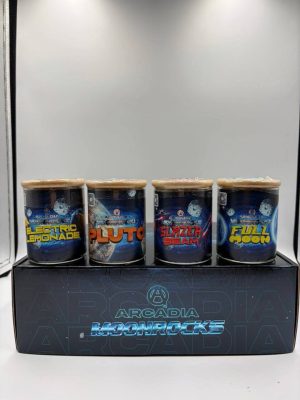
Deeper Look at Layer Interaction and Infusion Balance
Arcadia Moonrocks are defined not only by their ingredients but also by how those layers interact. The bud, concentrate, and kief do not function separately once combined. Instead, they form a unified structure where each part influences the other.
Moreover, the concentrate acts as a binding layer that holds the outer coating in place. As a result, the kief adheres more firmly while still maintaining a powdery surface. In addition, the internal bud absorbs part of the infused oils, which slightly alters its density and feel.
However, the balance between these layers is not always identical. Therefore, slight differences in coating thickness or absorption may occur. Consequently, no two pieces are completely identical in structure.
Furthermore, this layered interaction is what creates the signature profile associated with moonrock-style products in general.
Internal Breakdown Behavior
When Arcadia Moonrocks are broken apart, the internal structure becomes more visible. The outer kief layer begins to separate first, followed by the sticky concentrate layer beneath it.
Moreover, the bud inside tends to reveal a darker, more resin-rich appearance compared to standard flower. As a result, the internal material often looks denser and more compact.
In addition, small fragments of kief may continue to detach during handling. Therefore, the breakdown process is gradual rather than instant.
However, this controlled fragmentation is part of the product’s natural structure. Consequently, it contributes to the layered sensory experience rather than being considered a flaw.
Furthermore, the act of breaking the product often releases a stronger aromatic burst, which enhances the perception of depth.
Consistency and Batch Variation Factors
Arcadia Moonrocks are influenced by several variables during production. First, the quality of the base bud plays a major role. Then, the type and viscosity of the concentrate affect coating behavior. Finally, the fineness of the kief impacts surface texture.
Moreover, environmental conditions such as humidity can influence how evenly layers adhere. As a result, production consistency requires controlled handling conditions.
In addition, small shifts in ratio can significantly affect final density. Therefore, even slight adjustments in formulation may change the overall feel of a batch.
However, variation is not necessarily negative. Consequently, many users consider minor differences part of the product’s natural identity.
Aroma Evolution Over Time
Arcadia Moonrocks often display a changing aroma profile as time passes. Initially, the scent may appear muted due to the protective kief layer. However, once exposed to air or broken apart, deeper notes become more noticeable.
Moreover, the concentrate layer tends to release stronger aromatic compounds over time. As a result, the scent may intensify during handling.
In addition, storage duration can slightly shift aroma characteristics. Therefore, fresher batches may feel sharper, while aged ones may become smoother and more blended.
Furthermore, the transition from surface aroma to internal scent is one of the most noticeable sensory changes in moonrock-style products.
Structural Density and Weight Perception
Arcadia Moonrocks are generally heavier than they appear due to layered infusion. The combination of bud, oil-based concentrate, and kief increases overall mass.
Moreover, the compact structure reduces air gaps inside the product. As a result, the density feels significantly higher compared to standard flower.
In addition, this density affects how the product behaves during handling. Therefore, it may feel more solid and less fluffy than traditional cannabis buds.
However, despite this compact nature, the outer coating can still appear fragile. Consequently, the product presents a balance between density and surface delicacy.
Visual Texture Under Different Conditions
Arcadia Moonrocks can appear different depending on lighting and environment. In bright light, the kief layer often reflects a dusty, crystalline look. However, under softer lighting, the surface may appear smoother and more muted.
Moreover, the concentrate beneath the kief can create slight color variation. As a result, tones may shift between green, amber, and gold depending on composition.
In addition, when handled or lightly pressed, the surface texture may change subtly. Therefore, visual consistency can vary based on interaction.
However, this variability contributes to the natural aesthetic rather than reducing product appeal.
Material Interaction and Residue Behavior
Arcadia Moonrocks often leave small residues due to their layered construction. The kief layer, being fine and powder-like, may detach during handling. Meanwhile, the concentrate can create mild stickiness.
Moreover, these two factors interact during breakdown. As a result, residue behavior can change depending on temperature and pressure.
In addition, warmer conditions may increase softness of the concentrate layer. Therefore, handling in cooler environments is often more stable.
However, residue formation is a natural outcome of the infusion process. Consequently, it is generally expected within this product category.
Sensory Depth During Breakdown
As Arcadia Moonrocks are separated, sensory depth becomes more noticeable. The outer layer delivers an initial dry, earthy impression. However, the inner layers reveal richer and more resin-forward notes.
Moreover, the combination of textures enhances the perception of complexity. As a result, multiple sensory stages are experienced in sequence.
In addition, the contrast between dry kief and sticky concentrate creates a dual sensation. Therefore, both tactile and aromatic shifts occur simultaneously.
However, the intensity of these changes depends on handling style. Consequently, gentle breakdown tends to preserve more layered definition.
Handling Stability and Practical Considerations
Arcadia Moonrocks require more controlled handling than standard flower products. Their layered structure means that pressure and friction can alter appearance quickly.
Moreover, excessive force may compress or break down the outer coating. As a result, careful manipulation helps preserve visual quality.
In addition, indirect handling methods may be preferred to maintain structure. Therefore, minimal direct contact is often recommended in product presentation contexts.
However, despite their delicate surface, the internal structure remains relatively stable. Consequently, the product maintains integrity when handled properly.
Product Identity in Premium Segments
Arcadia Moonrocks are commonly associated with premium product positioning. Moreover, their multi-layer construction contributes to a perception of higher refinement compared to basic flower formats.
In addition, branding often emphasizes craftsmanship, density, and sensory richness. As a result, they are frequently highlighted in curated or specialty collections.
However, premium positioning does not imply uniform perfection. Therefore, natural variation remains part of their identity.
Furthermore, their appeal often comes from complexity rather than simplicity. Consequently, they are typically viewed as a niche product style rather than a general-use item.
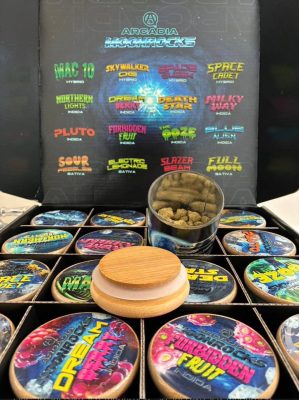
Extended Comparison With Infused Alternatives
Compared to other infused cannabis-style products, Arcadia Moonrocks follow a traditional three-layer structure. Some modern variants may introduce additional coatings or processing steps, but moonrocks typically remain simple in formulation.
Moreover, the balance between bud, concentrate, and kief remains central to their identity. As a result, they are often considered a foundational infused product style.
In addition, newer infused formats may prioritize smoother textures or uniform appearance. Therefore, moonrocks stand out for their raw, textured finish.
However, all infused products share the same core principle of enhancement. Consequently, Arcadia Moonrocks remain part of a broader innovation category.
Final Extended Summary
Arcadia Moonrocks present a structured and layered product experience shaped by infusion, density, and surface complexity. Moreover, their design emphasizes interaction between natural plant material and concentrated extracts.
In addition, their sensory profile evolves through handling, breakdown, and exposure. As a result, multiple stages of aroma and texture are experienced within a single product form.
However, variation remains an inherent characteristic due to natural material differences. Therefore, each batch maintains a degree of uniqueness while preserving the core identity.
Overall, Arcadia Moonrocks continue to represent a specialty-style cannabis product defined by layered construction, rich texture, and evolving sensory depth.
Be the first to review “Arcadia Moonrocks” Cancel reply
Related products
WEED STRAIN

WEED STRAIN

WEED STRAIN


WEED STRAIN
Reviews
There are no reviews yet.