
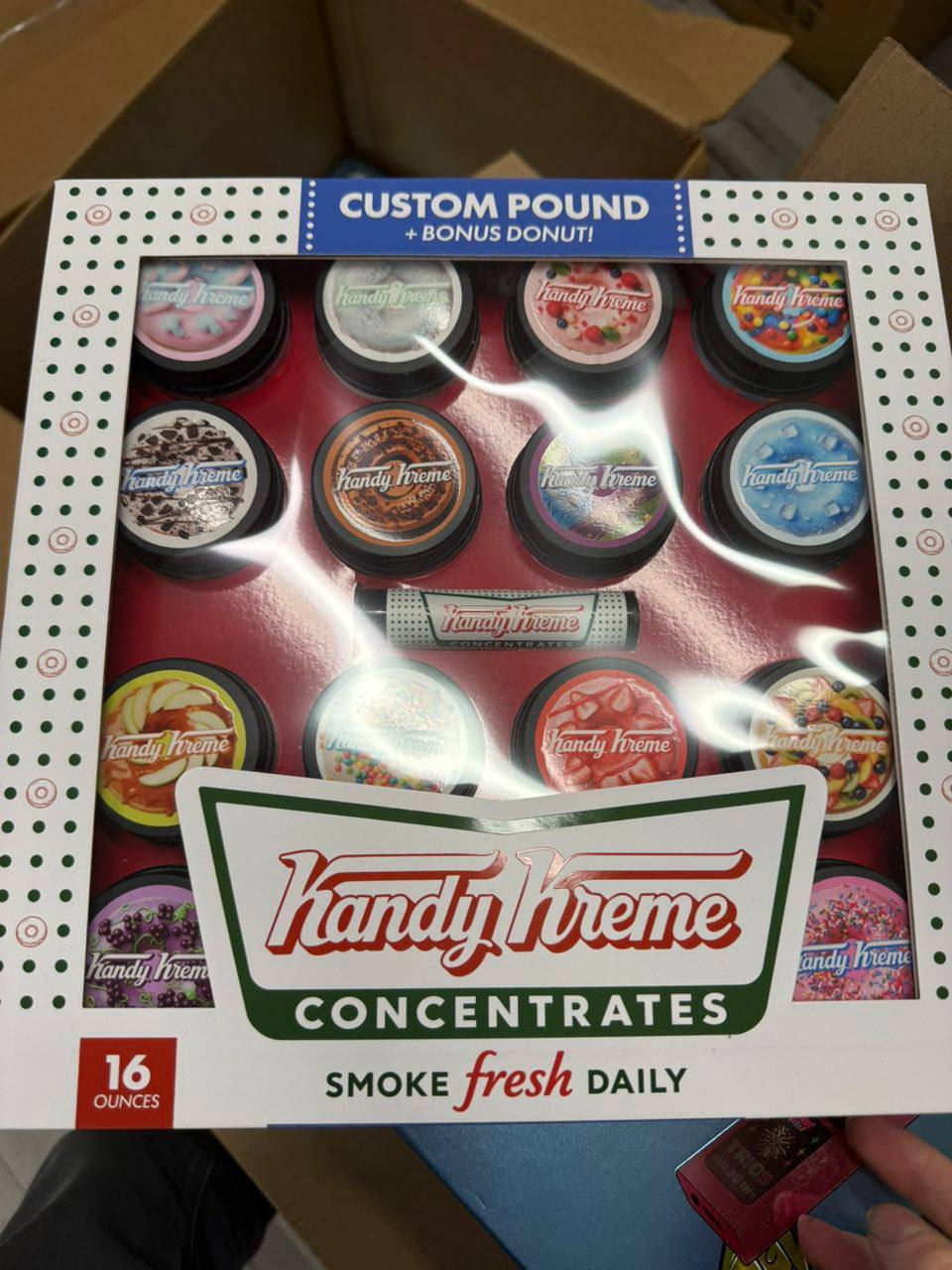
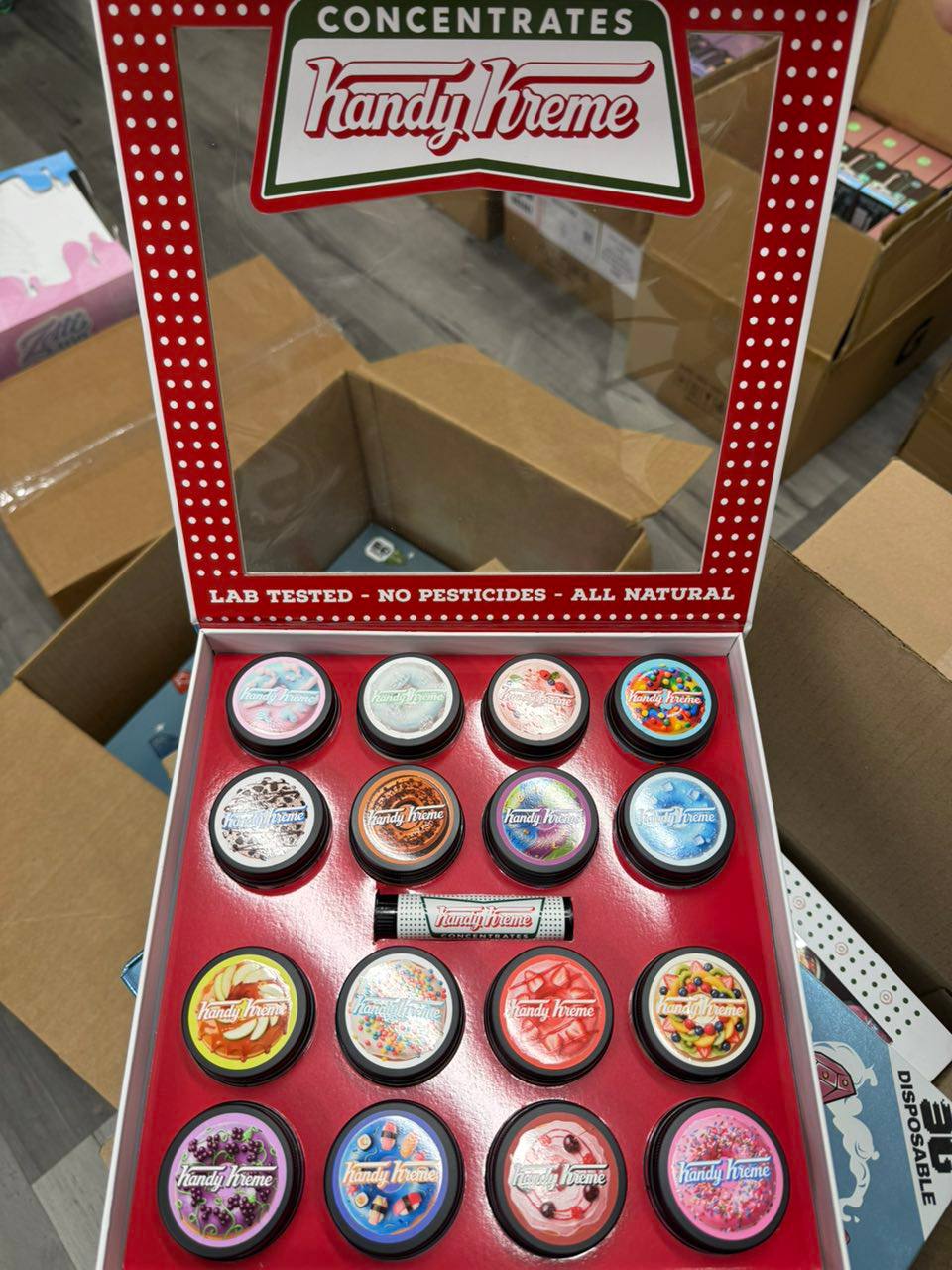
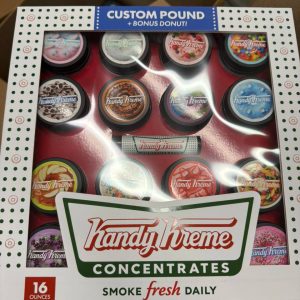
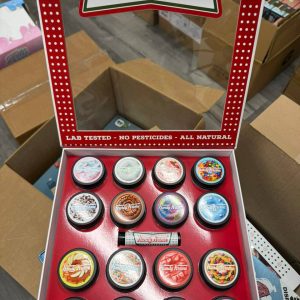
Kandy Kreme Premium Concentrates
Price range: 150 $ through 1 500 $
Kandy Kreme Premium Concentrates refers to a concentrate product presented around a rich, flavor-focused profile and a premium-style experience. Concentrates are highly concentrated cannabis products, and their characteristics can vary considerably depending on the extraction method, source material, formulation, and storage conditions.
Kandy Kreme Premium Concentrates: Product Overview
Introduction
Kandy Kreme Premium Concentrates refers to a concentrate product presented around a rich, flavor-focused profile and a premium-style experience. Concentrates are highly concentrated cannabis products, and their characteristics can vary considerably depending on the extraction method, source material, formulation, and storage conditions.
Unlike traditional flower, concentrates contain cannabis compounds in a more concentrated form. As a result, the appearance, aroma, texture, and potency can differ substantially from those of dried cannabis. Kandy Kreme Premium Concentrates fits within this broader category while placing particular emphasis on its dessert-inspired identity.
The name “Kandy Kreme” suggests a sweet and creamy character. However, the exact aroma and flavor profile depends on the specific batch and formulation. Therefore, product labeling remains the most reliable source for information about cannabinoids, ingredients, testing, and other specifications.
What Are Kandy Kreme Premium Concentrates?
Kandy Kreme Premium Concentrates are concentrated cannabis preparations designed around the characteristics of extracted cannabis compounds. During production, plant material is processed so that desirable compounds can be separated and concentrated into a smaller quantity of material.
Because concentrates contain a greater concentration of cannabinoids than ordinary flower, they are fundamentally different from standard cannabis products. The texture can range from soft and creamy to sticky, dense, crystalline, or otherwise specialized depending on the preparation method.
In addition, the final appearance does not necessarily indicate the complete chemical profile. Color, consistency, aroma, and texture can change naturally from one production batch to another.
For that reason, the product name alone should not be treated as a complete description of potency or composition. Laboratory testing and packaging information provide more dependable details.
Flavor and Aroma Profile
The Kandy Kreme name naturally evokes sweet, confectionery-inspired characteristics. A creamy aroma can be associated with dessert-like cannabis profiles, while sweet aromatic notes may contribute to the overall sensory identity.
Nevertheless, flavor perception is subjective. One person may notice creamy or sugary characteristics more strongly, while another may detect fruit, herbal, earthy, or botanical notes within the same product.
Terpenes contribute significantly to cannabis aroma and flavor. These naturally occurring aromatic compounds are found throughout the cannabis plant and may influence how a concentrate smells and tastes.
The terpene composition is affected by the genetics of the plant, cultivation conditions, harvesting practices, extraction techniques, and storage. Consequently, two products with similar names can still have noticeably different sensory profiles.
Appearance and Texture
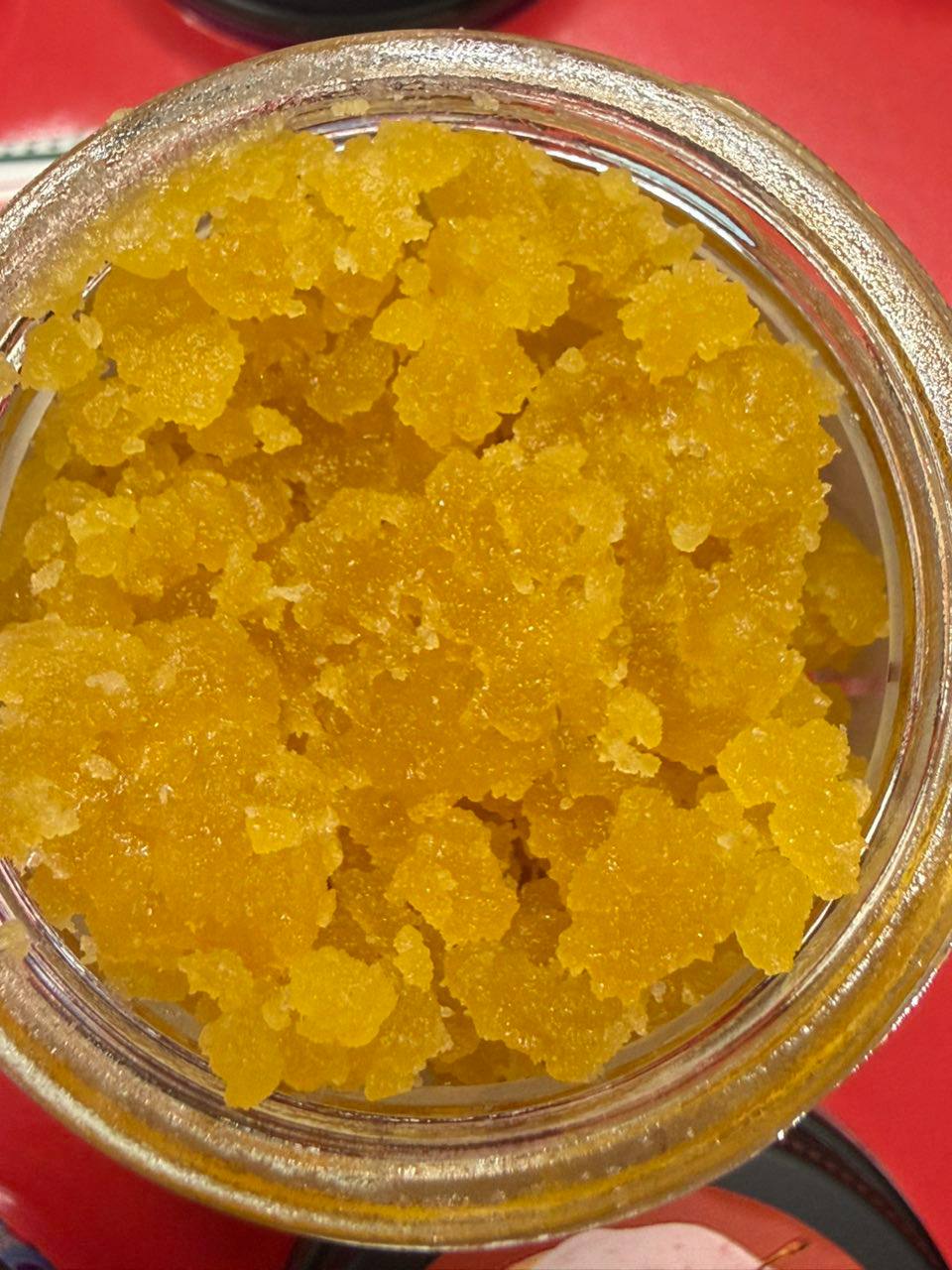
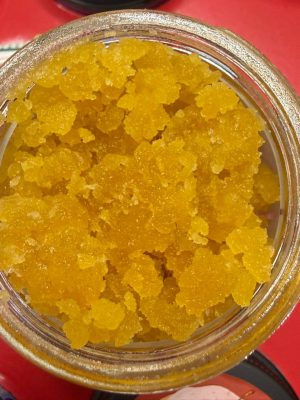
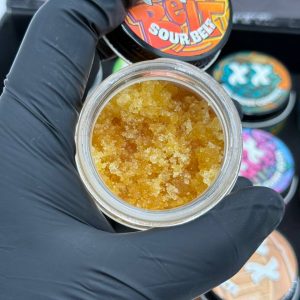
Concentrates can display a wide range of textures. Depending on the formulation, Kandy Kreme Premium Concentrates may have a consistency associated with soft concentrates, creamy extracts, resinous material, or another concentrate category.
Texture can change over time as well. Temperature, exposure to air, handling, and storage conditions can affect consistency. A concentrate that appears firm under cooler conditions may become softer when exposed to warmth.
Likewise, color can vary naturally. Shades may range from light golden tones to deeper amber or other colors. Color alone should not be considered a reliable measurement of quality or potency.
Instead, appearance is best considered alongside laboratory information, packaging details, ingredient declarations, and the manufacturer’s product specifications.
Concentrate Composition
Cannabis concentrates may contain cannabinoids such as THC, CBD, and other naturally occurring compounds. The precise cannabinoid profile depends on the source material and manufacturing process.
THC is the primary intoxicating cannabinoid commonly associated with cannabis. CBD, by contrast, is not generally associated with the same intoxicating effect. Other minor cannabinoids can also be present, depending on the plant material and extraction process.
The precise percentages should always be taken from the product’s current laboratory report or package label. Concentration can differ between batches, so a previous test result should not automatically be applied to a newer product.
In addition, some concentrates may contain naturally occurring terpenes or added ingredients. Product packaging should therefore be reviewed carefully when determining the complete composition.
Extraction and Production
The production of cannabis concentrates involves specialized processing intended to separate and concentrate compounds from cannabis plant material.
Different extraction approaches can produce different textures and chemical profiles. Some methods prioritize preserving aromatic compounds, while others may focus on cannabinoid concentration or a particular physical consistency.
Processing conditions can influence the finished concentrate in several ways. Temperature, pressure, starting material, purification, and handling all contribute to the final result.
Furthermore, storage after production can affect the product. Exposure to heat, light, oxygen, or excessive moisture may alter certain characteristics over time.
Because production methods vary among manufacturers, the most accurate information about Kandy Kreme Premium Concentrates should come from the packaging, laboratory documentation, and manufacturer-provided specifications.
Potency and Laboratory Testing
Potency is one of the most important characteristics to consider when evaluating a cannabis concentrate. Concentrates can contain substantially higher cannabinoid concentrations than traditional flower, making laboratory testing particularly relevant.
A laboratory report may identify the percentage or quantity of cannabinoids detected in a specific batch. Depending on the jurisdiction and testing requirements, the report may also provide information about contaminants, residual solvents, pesticides, heavy metals, microbial content, and other quality-control measurements.
Testing requirements differ by location. Therefore, the presence and format of laboratory information can vary according to applicable regulations.
A current batch-specific test is more useful than a general potency statement because cannabis products can differ from one production run to another.
Packaging Information
Packaging provides important details about a concentrate product. Information can include the product name, batch number, net weight, cannabinoid content, ingredients, manufacturing information, testing details, and applicable regulatory notices.
The label can also identify the product category and provide storage information where required.
Consumers should rely on the original packaging rather than unofficial product listings when checking specifications. Online descriptions may become outdated, while a package label generally corresponds to the specific item being examined.
Additionally, packaging requirements can differ between jurisdictions. A product sold legally in one location may have different labeling standards from a comparable product elsewhere.
Storage Characteristics
Storage conditions can influence the physical and sensory characteristics of cannabis concentrates. Heat may soften certain textures, while cold temperatures can make some products firmer.
Light and air exposure can also contribute to changes over time. For this reason, appropriate storage according to the manufacturer’s labeling is important for maintaining the product’s intended characteristics.
A concentrate may gradually change in appearance or consistency even when stored for a reasonable period. Such changes do not automatically establish whether a product is suitable or unsuitable for use.
The original packaging and manufacturer instructions should therefore remain the primary reference for storage information.
Why Batch Information Matters
Batch information helps distinguish one production run from another. Cannabis products are agricultural and processed goods, so variations can occur between batches.
A batch number can connect a product to particular laboratory results and manufacturing records. This connection is useful when verifying potency, ingredients, and testing information.
For example, a product description might state a general cannabinoid profile, while the laboratory report for a particular batch provides the exact measured values.
This distinction is important because generalized product information should not be interpreted as a guarantee of identical characteristics across every package.
Sensory Characteristics
The sensory experience of a concentrate can involve aroma, flavor, texture, and appearance. Each element contributes to how the product is perceived.
Kandy Kreme’s branding suggests a sweet and creamy direction, although the actual sensory characteristics should be determined by the product’s specific formulation and batch.
Aroma may be influenced by terpene composition. Flavor can be affected by both terpenes and other compounds. Texture is shaped by processing and storage conditions.
Furthermore, individual perception varies. Environmental factors, personal sensitivity, and previous experiences can all influence how someone perceives aroma and flavor.
Consequently, sensory descriptions are best understood as general descriptors rather than objective measurements.
Cannabinoids and Terpenes
Cannabinoids and terpenes are two major groups of compounds associated with cannabis products.
Cannabinoids interact with the body’s endocannabinoid system and contribute to the chemical identity of cannabis preparations. THC is widely recognized for its intoxicating properties, while CBD has a different profile.
Terpenes are aromatic compounds that occur naturally in many plants. In cannabis, they contribute to distinctive scents and flavors.
The combination of cannabinoids and terpenes differs between cultivars and extraction batches. As a result, the complete chemical profile is more informative than the product name alone.
Laboratory testing can provide a clearer picture of these compounds when appropriate testing data is available.
Product Consistency
Consistency is an important characteristic of concentrates because it can affect their appearance and handling properties.
Some concentrates remain relatively stable at room temperature, whereas others become softer or firmer depending on environmental conditions. Temperature changes can therefore produce noticeable differences without necessarily indicating a change in the underlying product category.
The consistency may also reflect the extraction and post-processing methods used during production.
For Kandy Kreme Premium Concentrates, the precise texture should be confirmed through the product’s current packaging or manufacturer’s description rather than assumed solely from its name.
Quality Considerations
Quality cannot be determined from appearance alone. A concentrate may have an attractive color or texture while still requiring laboratory verification to establish its cannabinoid content and testing status.
Several factors can contribute to product quality, including source material, processing methods, handling, packaging, storage, and laboratory testing.
A reliable product record can provide useful information about these characteristics. Batch-specific documentation is particularly valuable because it connects testing information to a defined production run.
Additionally, appropriate labeling helps establish traceability and provides important information about the product’s contents.
Legal and Regulatory Considerations
Cannabis concentrates are subject to laws that differ significantly by jurisdiction. Regulations can address possession, purchase, production, transportation, labeling, testing, and age restrictions.
Therefore, availability and permitted use should never be assumed based solely on the product’s presence online.
Local regulations should be checked before considering any cannabis concentrate. Where cannabis products are legally available, applicable rules may still differ between medical and adult-use markets.
The legal status of a particular product can also change as regulations are updated. Current local requirements are therefore more reliable than older information or general assumptions.
Responsible Product Information
Because concentrates can contain high levels of cannabinoids, accurate labeling is especially important. Product information should clearly distinguish between net weight, cannabinoid concentration, and total cannabinoid quantity where applicable.
These measurements describe different aspects of a product and should not be treated as interchangeable.
A 1-gram concentrate, for example, describes the amount of physical product. Its cannabinoid percentage describes the concentration of particular compounds within that material.
Understanding this distinction can make product labels easier to interpret.
Product Identification
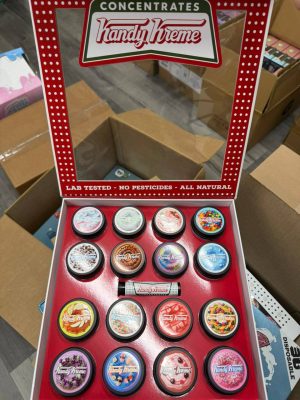
Kandy Kreme Premium Concentrates can be identified through several pieces of information, including its product name, packaging, batch information, stated weight, cannabinoid profile, and applicable testing details.
When multiple versions or batches exist, the complete package information becomes particularly important.
Product listings can sometimes contain abbreviated information. Therefore, the original package remains the better reference for verifying exact specifications.
This approach also helps reduce confusion between similarly named products, editions, or formulations.
Frequently Asked Questions
What are Kandy Kreme Premium Concentrates?
Kandy Kreme Premium Concentrates are cannabis concentrates presented under the Kandy Kreme name. Their exact cannabinoid profile, texture, flavor, and potency depend on the specific product and production batch.
What does the Kandy Kreme name suggest?
The name suggests a sweet, confectionery-inspired identity with potentially creamy or dessert-like aromatic characteristics. The actual profile, however, depends on the formulation and batch.
Are concentrates different from flower?
Yes. Concentrates are processed cannabis products in which cannabinoids and other compounds have been concentrated. Consequently, their cannabinoid concentration can differ substantially from that of dried flower.
Does the color determine quality?
No. Color alone does not establish potency, purity, or overall quality. Laboratory testing and batch-specific product information provide more meaningful evidence.
Can concentrate texture change?
Yes. Temperature, storage conditions, processing methods, and time can influence texture. Some concentrates become softer in warm environments and firmer in cooler conditions.
Where can potency information be found?
Potency information should generally be available on the product’s packaging or associated laboratory documentation where required. The current batch information is the most relevant reference.
Why is batch information important?
Batch information connects a particular product to its manufacturing and testing records. This can help distinguish one production run from another.
Does every batch have the same characteristics?
Not necessarily. Cannabis products can exhibit natural and processing-related variation. Cannabinoid concentrations, terpene profiles, texture, and aroma may differ between batches.
What affects concentrate aroma?
Terpenes play a major role in cannabis aroma. Plant genetics, cultivation, extraction, processing, and storage can all influence the final aromatic profile.
Is Kandy Kreme a specific strain?
The product name alone does not establish a specific cannabis strain or cultivar. The exact cultivar information should be confirmed through the manufacturer’s packaging or laboratory documentation.
Kandy Kreme Premium Concentrates represent a concentrate-style cannabis product associated with a sweet, creamy, dessert-inspired identity. Its specific characteristics depend on the formulation, source material, extraction process, batch, and storage conditions.
The product’s appearance may provide clues about texture and consistency, but visual characteristics alone cannot establish potency or purity. Instead, laboratory testing and official packaging provide the most reliable information about cannabinoids, ingredients, and batch-specific specifications.
Similarly, the name can suggest a flavor direction without guaranteeing a particular terpene profile. Aroma and flavor can vary according to genetics, processing, and individual perception.
For accurate product identification, details such as the batch number, net weight, cannabinoid content, ingredients, testing information, and applicable regulatory labeling remain important.
Overall, Kandy Kreme Premium Concentrates can be described through their concentrate format, dessert-inspired naming, potential aromatic characteristics, and batch-dependent composition. Exact specifications should always be taken from the current product packaging and corresponding laboratory information rather than assumed from general descriptions.
Kandy Kreme Premium Concentrates: Detailed Product Information
Understanding the Concentrate Experience
Kandy Kreme Premium Concentrates occupy a distinct category within cannabis products because the plant material has undergone additional processing. Rather than remaining in its original dried form, the material is transformed into a concentrated preparation containing cannabinoids and aromatic compounds.
As a result, the physical characteristics can be noticeably different from traditional flower. Concentrates may appear more compact, more aromatic, or more resinous, depending on the production process. In addition, their texture can provide clues about the way the extract was processed.
The Kandy Kreme name gives the product a distinctive identity. Its dessert-inspired wording creates an association with sweetness and creaminess, while the actual sensory profile depends on the specific formulation and batch.
For that reason, the product should be evaluated through its verified specifications rather than through the name alone.
A Closer Look at the Product Profile
A concentrate’s overall profile is shaped by several factors working together. The original cannabis genetics establish the foundation, while cultivation conditions influence the plant’s chemical composition.
After harvesting, processing methods can further affect the resulting extract. Temperature, pressure, extraction conditions, purification, and post-processing may all contribute to differences in appearance, aroma, and consistency.
Furthermore, storage can influence the final presentation. Changes in temperature may alter texture, while exposure to air and light can gradually affect certain compounds.
Consequently, Kandy Kreme Premium Concentrates may display characteristics that differ slightly from one batch to another without the product necessarily losing its overall identity.
Sweet-Inspired Identity
The Kandy Kreme name naturally creates expectations around a sweet and creamy profile. Dessert-inspired cannabis products are often associated with aromatic notes that resemble confectionery, cream, fruit, vanilla, or sugary botanical characteristics.
However, these descriptions should be considered sensory references rather than guaranteed ingredients.
Terpenes are largely responsible for the aromatic differences found between cannabis varieties. Some terpene combinations can create fruity aromas, whereas others may produce earthy, citrus, floral, spicy, or sweet impressions.
The precise profile of Kandy Kreme Premium Concentrates should therefore be confirmed through the information supplied for the particular product.
Texture and Physical Characteristics
Concentrates are available in numerous physical forms. Some have a smooth and creamy appearance, while others may be thicker, more resinous, crystalline, or semi-solid.
The term “Kreme” can suggest a soft consistency, but the actual texture depends on the product’s formulation and processing.
Temperature also plays a significant role. A concentrate can become firmer in cooler conditions and softer when exposed to warmth. This natural change can affect its appearance without necessarily changing the product’s fundamental identity.
Likewise, handling and exposure to the surrounding environment may influence texture over time.
For accurate product information, the manufacturer’s stated product category and current packaging should take priority over assumptions based on appearance.
The Role of Cannabis Genetics
Cannabis genetics provide the starting point for the chemical composition of an extract. Different cultivars can produce different cannabinoid and terpene combinations.
Those differences can influence aroma, flavor, color, and other characteristics after extraction.
If Kandy Kreme Premium Concentrates are associated with a particular cultivar, that information should be confirmed through the product label or official documentation.
A product name by itself does not necessarily identify a specific genetic lineage. Similar names can sometimes be used across different product categories or batches.
Therefore, cultivar information should be treated as a separate specification from branding.
Cannabinoid Profile
Cannabinoids are among the most important compounds found in cannabis concentrates. THC and CBD are two of the best-known examples, although cannabis contains numerous other cannabinoids.
THC is associated with intoxicating effects, while CBD generally does not produce the same intoxicating response.
The amount of each cannabinoid can differ significantly between products. Concentrates may contain considerably higher cannabinoid concentrations than traditional cannabis flower, making the stated laboratory values particularly important.
A product’s cannabinoid percentage should be interpreted together with its total net weight and package information.
Additionally, cannabinoid values may vary slightly between production batches. Therefore, current laboratory documentation remains the strongest reference for exact measurements.
Terpene Characteristics
Terpenes are naturally occurring aromatic compounds found in cannabis and many other plants. They contribute strongly to the scent and flavor associated with different cannabis varieties.
A sweet and creamy profile may result from a combination of terpene characteristics rather than from one single compound.
Terpenes can also influence how a product is perceived. For example, one person might notice fruity notes first, while another may experience the same product as more floral or herbal.
Extraction and storage can influence terpene preservation as well. Certain aromatic compounds are sensitive to environmental conditions, which means handling and packaging can affect the final sensory presentation.
For Kandy Kreme Premium Concentrates, the actual terpene profile should be determined from available laboratory or manufacturer information.
Product Potency
Potency describes the concentration or amount of cannabinoids present in a cannabis product. With concentrates, potency deserves particular attention because the cannabinoid content can be substantially higher than in many forms of flower.
The package may list cannabinoid percentages, milligrams, or both, depending on local requirements.
These numbers should be read carefully because concentration and total quantity represent different measurements.
A product’s total weight describes how much physical material is present. Its cannabinoid percentage describes the proportion of a particular compound within that material.
Understanding this distinction makes the information on concentrate packaging easier to interpret.
Laboratory Verification
Laboratory testing provides an objective way to assess specific product characteristics.
Depending on local regulations, testing may cover cannabinoid potency, terpene composition, residual solvents, pesticides, heavy metals, microbial contaminants, and other quality indicators.
The exact testing requirements vary by jurisdiction. Nevertheless, batch-specific testing can provide useful information about the particular product being evaluated.
A current certificate or laboratory report should be associated with the relevant batch whenever such documentation is required.
This is especially important when comparing different versions of a product because specifications can change between production runs.
Batch-to-Batch Variation
Cannabis products are not always identical from one batch to another. Agricultural variables, processing conditions, and storage can contribute to natural differences.
For example, the aroma of one batch may be slightly more pronounced than another. Likewise, texture or color may show minor variation.
These differences can occur even when the same product name is used.
Batch numbers therefore provide valuable context. They allow testing data and production information to be connected to a particular package.
For the most accurate description, the current batch should always take precedence over generalized product information.
Packaging and Presentation
Packaging serves several practical purposes beyond appearance. It can provide product identification, weight information, cannabinoid data, ingredients, testing details, and regulatory information.
Clear labeling is especially valuable for concentrated products because the information helps distinguish the physical amount of product from its cannabinoid concentration.
Packaging can also protect the contents from environmental factors such as light and air.
Depending on the jurisdiction and product category, packaging may include additional warnings or required information.
Therefore, the original packaging remains an important part of the product’s overall information.
Storage and Product Stability
Storage conditions can influence how a concentrate looks and feels over time.
Temperature is particularly relevant. A warmer environment can soften some concentrates, while cooler conditions may produce a firmer consistency.
Light and oxygen can also affect certain cannabis compounds. As a result, packaging and storage practices can influence long-term product characteristics.
The manufacturer’s storage information should be considered the primary reference because different concentrate formulations can respond differently to environmental conditions.
Changes in color or texture should not automatically be interpreted as evidence of a particular quality level. A complete evaluation requires consideration of packaging, testing, age, storage history, and product specifications.
Comparing Concentrates With Flower
Traditional flower consists of harvested and dried cannabis plant material. Concentrates, by contrast, are processed preparations in which selected plant compounds have been concentrated.
This difference affects several characteristics.
Flower generally retains its recognizable plant structure, while concentrates have a more processed appearance. Concentrates can also contain higher cannabinoid concentrations, depending on the formulation.
Additionally, concentrate textures vary considerably. Some may be creamy, sticky, resinous, crystalline, or semi-solid.
Kandy Kreme Premium Concentrates therefore belong to a product category that differs significantly from conventional flower in both physical form and chemical concentration.
Product Information and Transparency
Transparent product information helps consumers understand what they are evaluating.
Important details can include the exact product name, batch number, net weight, cannabinoid concentrations, ingredient information, terpene information, testing details, manufacturing information, and applicable warnings.
The more complete the information, the easier it becomes to distinguish verified characteristics from assumptions.
This is particularly useful when products have similar names or when multiple editions are available.
A clear product record also makes it easier to compare one batch with another without relying solely on appearance or branding.
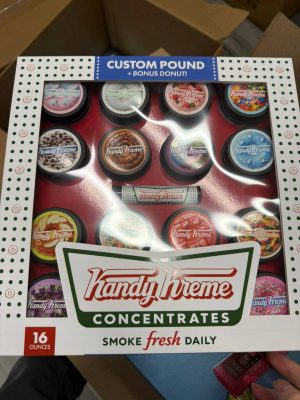
Why Product Names Matter
A product name establishes identity, but it does not necessarily provide every technical detail.
“Kandy Kreme” communicates a particular branding direction and creates a sensory association. However, it does not by itself establish cannabinoid content, terpene percentages, cultivar lineage, or extraction method.
Those specifications require separate verification.
This distinction is important because descriptive names can sometimes create expectations that are broader than the technical information available on the package.
The product name is therefore best understood as one part of the complete product description.
Sensory Perception and Individual Differences
Aroma and flavor are subjective experiences.
Two people can evaluate the same concentrate and identify different characteristics. One person may notice sweet notes immediately, while another may detect creamy, fruity, earthy, or herbal elements.
Several factors can influence perception, including individual sensitivity, previous experiences, environment, and the product’s temperature.
Therefore, sensory descriptions should not be treated as laboratory measurements.
For Kandy Kreme Premium Concentrates, terms such as sweet or creamy can describe the intended identity while leaving room for natural differences in perception.
Manufacturing Considerations
The manufacturing process has an important role in determining a concentrate’s final characteristics.
Starting material, extraction conditions, filtration, purification, post-processing, and packaging can all affect the finished product.
Some production methods are designed to preserve aromatic compounds, while others prioritize particular textures or cannabinoid concentrations.
Because manufacturing techniques differ, the exact process behind a particular Kandy Kreme product should only be stated when supported by manufacturer information.
Avoiding unsupported production claims helps maintain an accurate product description.
Quality-Control Factors
Quality control can involve multiple stages, from raw material assessment through final product testing.
The starting cannabis material may be evaluated before processing. The finished concentrate can then be tested for cannabinoid content and, where required, contaminants or other quality indicators.
Packaging inspection can provide another layer of control by confirming product identity and labeling information.
Together, these processes help create a more complete picture of the finished concentrate.
Legal Market Considerations
Cannabis concentrate regulations vary considerably around the world.
In regions where cannabis products are legally available, regulations may govern production, testing, labeling, packaging, possession, sale, and age requirements.
These rules can also differ between medical and adult-use markets.
Consequently, the legal status of Kandy Kreme Premium Concentrates should be evaluated according to the laws applicable to the location where the product is offered.
Online availability does not automatically establish legality in every jurisdiction.
Frequently Asked Questions
What makes Kandy Kreme Premium Concentrates different?
The product is positioned as a premium-style cannabis concentrate with a name associated with sweet and creamy characteristics. Its exact differences depend on the specific formulation, batch, and manufacturing information.
Does Kandy Kreme guarantee a creamy flavor?
No. The name suggests a creamy, dessert-inspired identity, but actual flavor perception depends on the product’s terpene profile and individual sensory perception.
Can the concentrate’s appearance vary?
Yes. Color and texture can vary because of genetics, extraction, processing, temperature, storage, and natural batch differences.
Is concentrate potency always the same?
No. Potency can differ between products and batches. Current packaging and laboratory results provide the most accurate information.
What information is most important on the label?
Useful details include net weight, cannabinoid content, batch number, ingredients, testing information, and any required regulatory statements.
Why can concentrates have different textures?
Extraction and post-processing methods can influence consistency. Temperature and storage conditions can also cause noticeable changes.
Are terpenes responsible for flavor?
Terpenes are major contributors to cannabis aroma and flavor, although other compounds can also influence sensory characteristics.
Can storage affect a concentrate?
Yes. Temperature, light, air exposure, and time can influence appearance, texture, aroma, and certain chemical characteristics.
Closing Perspective
Kandy Kreme Premium Concentrates can be understood through several defining characteristics: concentrate format, dessert-inspired branding, cannabinoid concentration, aromatic compounds, physical texture, and batch-specific production details.
The product’s name establishes a recognizable identity, while laboratory results and packaging provide the technical information needed to understand its actual composition.
In addition, natural variation can occur between batches. Differences in cultivation, genetics, processing, and storage may influence aroma, texture, color, and cannabinoid content.
For that reason, the most reliable description combines general product characteristics with current batch-specific information.
Kandy Kreme Premium Concentrates therefore represent more than a name or visual presentation. Their complete identity is shaped by the source material, manufacturing process, chemical composition, packaging, testing, and storage conditions.
When these factors are considered together, the product can be described more accurately and transparently while allowing its specific characteristics to remain grounded in verifiable information.
Be the first to review “Kandy Kreme Premium Concentrates”
Related products

CONCENTRATES

DISPOSABLE
PRE ROLLS

CONCENTRATES
CONCENTRATES
CONCENTRATES
CONCENTRATES

CONCENTRATES
Reviews
There are no reviews yet.