


Leafy Dual 2G Disposable

Price range: 150 $ through 1 000 $
The Leafy Dual 2G Disposable is a compact disposable device designed around a dual-format presentation. Its name highlights two key characteristics: a combined 2-gram capacity and a dual configuration intended to distinguish it from standard single-format disposable devices.
Leafy Dual 2G Disposable: Product Overview
Introduction
The Leafy Dual 2G Disposable is a compact disposable device designed around a dual-format presentation. Its name highlights two key characteristics: a combined 2-gram capacity and a dual configuration intended to distinguish it from standard single-format disposable devices.
The product is presented in a portable form factor, making its physical design an important part of its identity. Rather than relying on a separate battery and cartridge arrangement, the disposable format combines the primary components within one device. As a result, the overall structure is relatively simple and self-contained.
Dual Design and Product Format
The defining feature of the Leafy Dual 2G Disposable is its dual configuration. This format separates it from conventional disposable products that typically feature one reservoir or one product selection.
The 2-gram designation refers to the stated total capacity of the product. Exact contents, formulation, cannabinoid profile, and available selections can vary by version and market, so those details should be confirmed from the manufacturer’s packaging or the applicable product label.
Because the device is disposable, its components are generally intended to remain together rather than being transferred between separate hardware pieces. This creates a straightforward product format while also reducing the number of individual components associated with the device.
Compact Construction
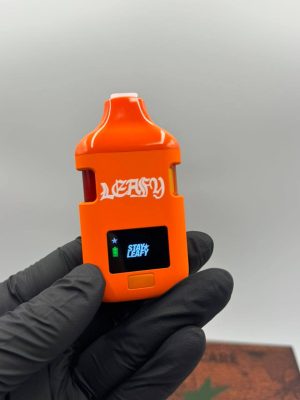
Portability is one of the most noticeable characteristics of a disposable design. The Leafy Dual 2G Disposable uses a compact body that incorporates the internal reservoir, heating components, and power system into one unit.
The exterior can vary depending on the specific release, edition, or packaging. Branding and printed graphics may also differ between versions. Therefore, the physical appearance shown in a product listing should be compared with the actual packaging received.
The streamlined construction gives the device a distinct appearance while keeping the overall form relatively compact. Its size and shape also contribute to the recognizable profile associated with disposable devices.
Capacity
The Leafy Dual 2G Disposable is identified by a total stated capacity of 2 grams. Capacity is an important specification because it describes the amount of material contained within the device.
However, capacity should not be confused with potency. A gram measurement describes quantity, whereas potency depends on the formulation and laboratory-tested cannabinoid concentration. Those values should therefore be obtained from the official label or certificate of analysis when available.
Likewise, the actual usable amount can depend on several physical factors, including the construction of the reservoir and heating system.
Internal Components
A disposable device typically integrates several components into a single housing. These may include a reservoir, heating element, battery, airflow pathway, and exterior mouthpiece.
The internal arrangement of the Leafy Dual 2G Disposable depends on the particular version. Product specifications should therefore be checked against the manufacturer’s information rather than assumed from the product name alone.
The integrated design distinguishes disposable hardware from refillable systems. In a refillable device, individual components can often be separated or replaced. With a disposable format, the hardware is generally treated as one complete unit.
Product Appearance
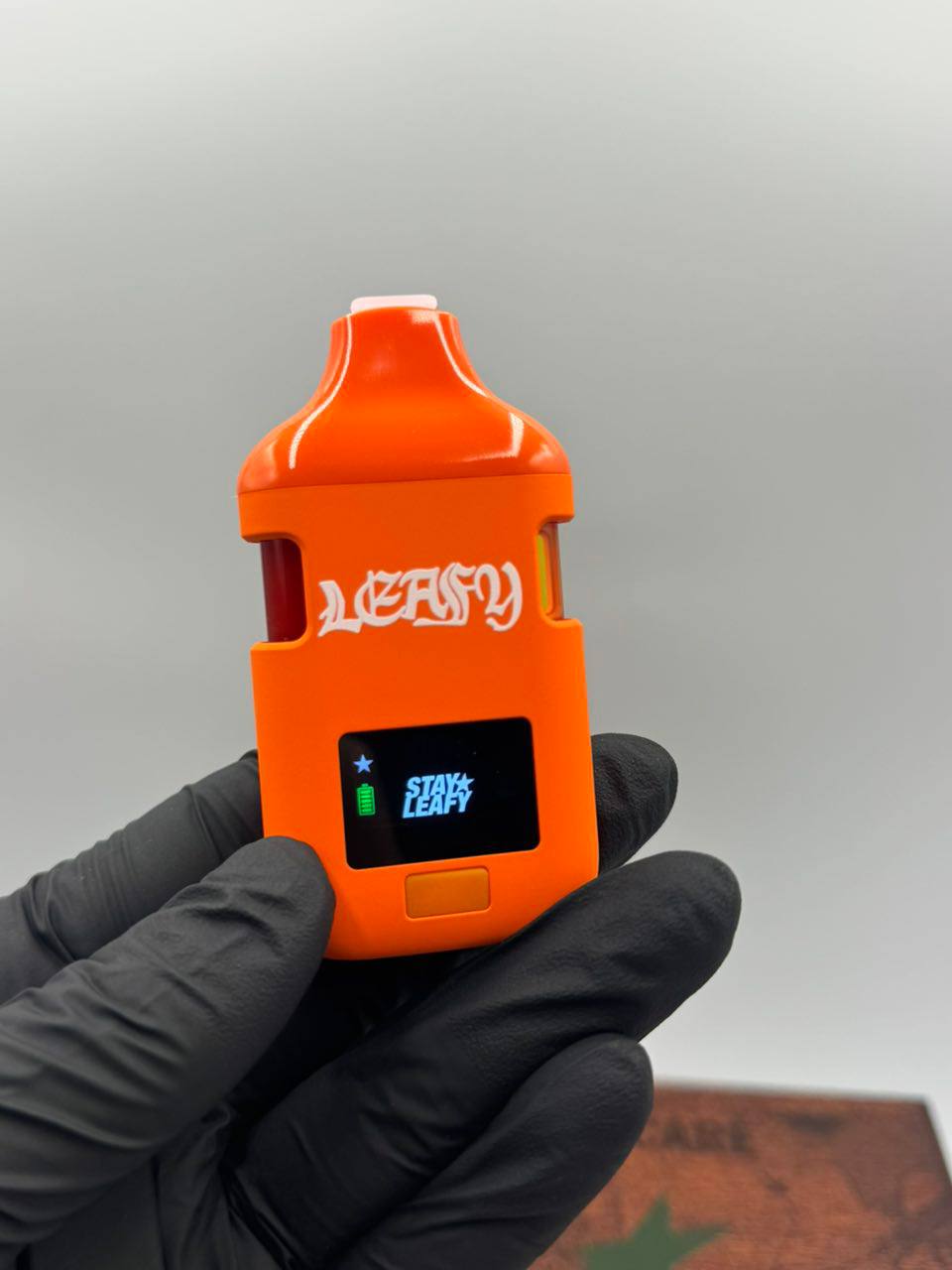
The appearance of the Leafy Dual 2G Disposable is influenced by its branding and dual-format construction. The exterior may feature printed graphics, product identification, capacity information, and other labeling required for the applicable market.
Packaging can change over time. Furthermore, different production runs may feature different artwork or labeling. For that reason, product photographs should be treated as visual references rather than guarantees of a particular design.
Clear labeling remains important because it allows users and retailers to identify the product, stated capacity, manufacturer information, and other relevant details.
Labeling and Verification
Product labeling provides important information about the specific version of a disposable device. Depending on the jurisdiction and product category, packaging may include batch information, manufacturing details, ingredient information, testing information, or regulatory statements.
The information printed on the package should take priority over generalized online descriptions. In addition, laboratory testing information, when supplied by the manufacturer, can provide more specific details about the contents.
Verification is particularly relevant when different editions share similar names or visual designs. Product names alone may not establish the exact formulation or specifications of an individual unit.
Dual Configuration
The dual configuration is central to the product’s identity. Instead of presenting a conventional single-format design, the Leafy Dual 2G Disposable is structured around two distinct sides or selections within one overall product format.
The precise configuration depends on the specific release. Some versions may distinguish the two sides through labeling, flavor names, strain names, or other identifiers. Those details should always be confirmed from the packaging for the exact product version.
This approach creates a different physical and organizational format from a traditional single-reservoir disposable.
Hardware Considerations
Hardware specifications can influence how a disposable device operates. Factors such as battery capacity, heating technology, airflow design, reservoir construction, and mouthpiece shape can differ among manufacturers and product generations.
Not every specification is necessarily published for every version of the Leafy Dual 2G Disposable. Consequently, unsupported technical claims should be avoided when creating a product listing.
A reliable description separates confirmed specifications from general observations. This helps keep product information accurate and reduces confusion between different versions.
Packaging
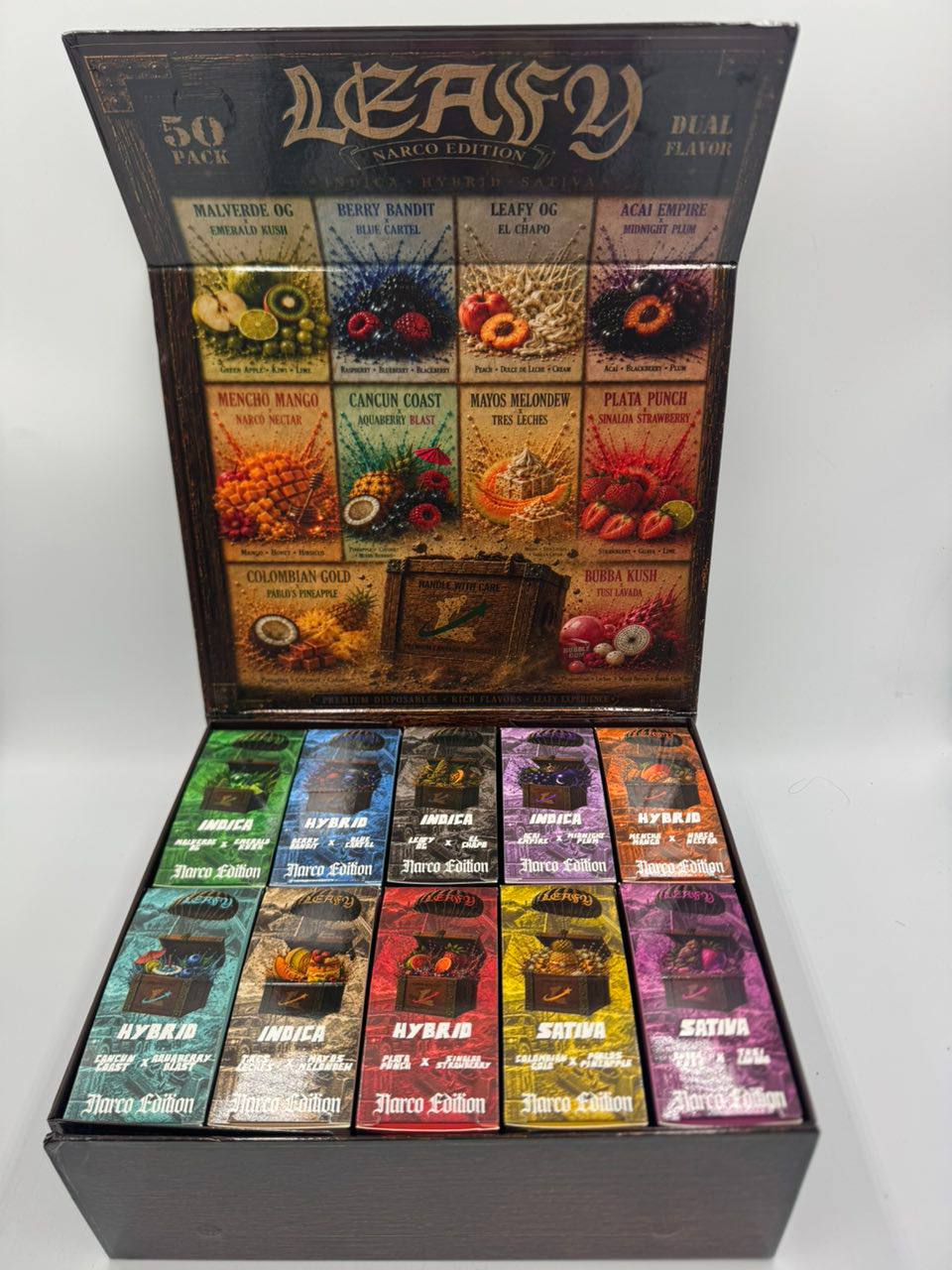
Packaging is another important part of the product presentation. The box or container may identify the product name, capacity, manufacturer, batch information, warnings, and other required details.
The design can also feature colors, graphics, logos, and edition-specific artwork. However, packaging should not be treated as proof of authenticity by itself. Verification should rely on appropriate manufacturer or regulatory information where available.
Product listings should ideally show the current packaging clearly, particularly when older and newer versions have different visual designs.
Product Identification
Correct identification becomes especially important when products have similar names. The Leafy Dual 2G Disposable should be identified using the complete product name together with its specific version, edition, formulation, or other distinguishing information when applicable.
A product listing can therefore include factual specifications such as:
- Product name
- Product format
- Stated total capacity
- Number of selections or configurations
- Packaging information
- Manufacturer details
- Batch or lot information when available
- Laboratory-testing information when provided
These details help distinguish one product variation from another.
Quality and Manufacturing Information
Quality information should come from verifiable sources. Manufacturing standards, testing procedures, ingredient information, and batch documentation can vary by producer and jurisdiction.
For that reason, broad claims about purity, quality, safety, or performance should not be made unless they are supported by appropriate documentation.
Laboratory reports can provide useful information about the contents of a particular batch. However, a test result from one batch should not automatically be applied to every version or production run.
Storage and Product Condition
The condition of a disposable device can be affected by its storage environment. Temperature, exposure to sunlight, moisture, and prolonged storage can influence the physical condition of packaged products.
Packaging should remain intact until the product is appropriately handled. The manufacturer’s storage information should take precedence because recommended conditions can vary by formulation and device construction.
A product description can mention storage information without making unsupported claims about shelf life or long-term performance.
Responsible Product Information
Accurate product descriptions should focus on information that can be verified. Capacity, format, packaging, manufacturer details, and laboratory documentation are examples of useful factual information.
In contrast, unsupported claims about effects, medical benefits, guaranteed performance, or specific outcomes should be avoided.
This approach also makes product information easier to understand. Readers can quickly distinguish between confirmed specifications and details that may vary between versions.
Differences Between Product Versions
Disposable products can change during their production life. Manufacturers may introduce updated hardware, revised packaging, new artwork, or different formulations.
Therefore, the phrase “Leafy Dual 2G Disposable” may not describe every physical characteristic of every unit carrying that name. Version-specific information is particularly important when multiple editions exist.
Checking the packaging, batch information, and official manufacturer documentation provides a more reliable basis for identifying the exact product.
Why Specifications Matter
Specifications provide a clearer understanding of what a product actually is. The stated 2-gram capacity establishes a quantity specification, while the dual designation describes the product’s configuration.
Neither term, however, establishes potency, effects, quality, or performance on its own. Those characteristics require separate information.
Consequently, a complete product listing should keep capacity, formulation, hardware, and testing information clearly separated.
Product Description Summary
The Leafy Dual 2G Disposable is a compact disposable device identified by its dual configuration and stated 2-gram total capacity. Its integrated construction combines the primary hardware components into a single product format.
The exact formulation, internal specifications, packaging, and available versions may vary. For accurate identification, the physical packaging and manufacturer-provided documentation should be used as the primary references.
Overall, the product’s main distinguishing characteristics are its disposable format, dual configuration, stated 2-gram capacity, and compact integrated construction. Additional details should be verified against the specific version and batch rather than inferred from the product name alone.
For a reliable listing, the most useful information includes the exact product version, stated capacity, configuration, manufacturer, packaging details, and available laboratory documentation. Keeping these details factual helps create a clear description without introducing unsupported claims.
Because product specifications can change between releases, the current package remains the best reference for confirming the exact contents and characteristics of an individual Leafy Dual 2G Disposable.
Additional Product Details
Design and Portability
The compact structure is one of the most noticeable aspects of this disposable format. The body is designed to hold the internal components within a single enclosure, creating a product that does not require a separate external battery or cartridge housing.
The overall dimensions can vary between production versions. Likewise, the exterior finish may differ according to the specific edition. Product photography can therefore provide useful visual information, although the packaging and physical unit remain the better references for confirming the exact version.
The portable construction also gives the product a relatively simple appearance. Branding, labeling, and other printed details are generally positioned on the outer body or accompanying packaging.
Dual-Selection Structure
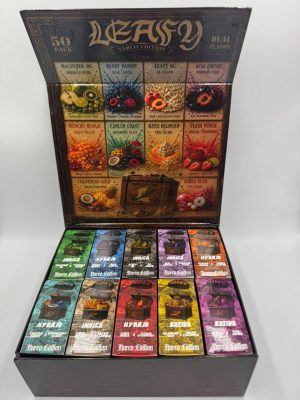
The dual configuration gives the product a different layout from a conventional single-selection disposable. Two selections or chambers are incorporated into the overall design, depending on the specific version.
The names associated with those selections may be displayed on the packaging or directly on the device. Since product editions can vary, those names should be checked against the individual package rather than assumed from general product listings.
This structure also makes accurate labeling particularly important. Clear identification allows each side of the device to be distinguished without relying solely on appearance.
Capacity Information
The stated 2-gram capacity represents the total quantity associated with the product. It does not, by itself, indicate cannabinoid concentration, formulation strength, or expected duration.
Those characteristics depend on the specific contents and hardware. Laboratory documentation, when available, can provide additional information about cannabinoid concentrations and other measurable characteristics.
Capacity information should therefore be presented separately from potency information. Keeping these specifications distinct creates a more accurate product description and prevents unnecessary assumptions.
Materials and Construction
Disposable devices are generally constructed from a combination of exterior housing materials and internal electronic components. The exact materials used in a particular model are not always publicly listed.
The external housing may contain printed branding and identification information, while the internal structure contains the battery, reservoir system, heating components, and associated electrical parts.
Without manufacturer documentation, specific material claims should be avoided. A product listing can instead describe the visible construction and confirmed specifications without assigning unsupported technical characteristics.
Heating System
A heating element is typically incorporated into a disposable vapor device to convert the contents of the reservoir into an inhalable aerosol. The exact heating technology can differ between models and manufacturers.
Unless the manufacturer identifies the specific technology, detailed claims about coil construction or heating performance should not be presented as confirmed specifications.
The same principle applies to claims involving temperature control, airflow optimization, or specialized heating systems. Such descriptions should only appear when supported by reliable product documentation.
Battery Integration
The battery is another integrated component of a disposable design. Unlike rechargeable hardware intended for repeated use with replacement cartridges, a disposable unit generally combines its power source with the rest of the device.
Battery capacity and charging specifications can vary between versions. Some products may include rechargeable hardware, while others may use a non-rechargeable configuration.
For this reason, the exact package instructions should be treated as the authoritative source for information about charging, battery status, and product handling.
Mouthpiece Design
The mouthpiece forms the connection between the internal airflow pathway and the user-facing portion of the device. Its shape and material can vary according to the manufacturer and model.
A well-defined mouthpiece also contributes to the overall appearance of the device. However, specific claims about comfort, airflow, or performance should not be presented as universal characteristics unless they have been independently verified.
Product photographs can help identify the mouthpiece design, particularly when multiple versions of a similar product are available.
Airflow Structure
Airflow is an important part of disposable hardware because air must travel through the device during operation. The internal pathway can influence how the device is constructed and how the product is presented.
Manufacturers may use different airflow arrangements, although detailed technical information is not always publicly available.
As a result, a reliable product description should avoid assigning a specific airflow technology without documentation. General information about the integrated airflow structure is sufficient when detailed specifications are unavailable.
Packaging Information
The packaging normally provides more detailed identification than the exterior of the device alone. Depending on the market, it can contain information relating to the product name, contents, manufacturer, batch number, warnings, testing, and other regulatory requirements.
Packaging may also identify the individual selections included in a dual-format product. This is particularly useful when different versions use similar exterior designs.
Changes to artwork should not necessarily be interpreted as changes to the underlying product. Updated packaging can occur during different production periods.
Batch Information
Batch or lot information can help distinguish one production run from another. When laboratory testing is provided, the corresponding batch information can be useful for matching the report to the physical product.
This is more reliable than assuming that all products with the same name have identical laboratory results.
A product listing can therefore include batch information when it is available and relevant. However, temporary or batch-specific information should be kept separate from general product specifications.
Laboratory Testing
Laboratory testing can provide measurable information about a product’s contents. Depending on the testing program, reports may identify cannabinoid concentrations, contaminants, residual solvents, pesticides, heavy metals, or other parameters.
The scope of testing varies considerably. Therefore, a product should not be described as having passed a particular test unless the relevant documentation confirms it.
When a certificate of analysis is available, the report date and batch number can also help establish which product the results apply to.
Product Authenticity
Authenticity is an important consideration for branded products. Visual similarity alone does not establish whether an individual unit is genuine.
Packaging identifiers, batch information, manufacturer documentation, and applicable verification systems can provide stronger evidence.
Retail listings should avoid absolute authenticity claims unless the seller has appropriate documentation supporting them. Clear photographs of the packaging can also help customers compare product information with official references.
Version Recognition
Several factors can help distinguish different versions of the same product. These include packaging artwork, device shape, printed markings, stated capacity, selection names, and production information.
The exact combination can change over time. Therefore, descriptions that focus only on appearance may become outdated when packaging is redesigned.
A stronger catalog entry identifies the product by its name and confirmed specifications while noting that visual details can vary between releases.
Product Condition
The condition of a packaged disposable can influence how it should be evaluated. Damaged packaging, broken seals, leaking material, visible cracks, or other physical abnormalities can indicate that a product requires additional inspection.
A product listing should describe the expected packaging condition accurately rather than making broad claims about every individual unit.
Likewise, photographs should represent the current product whenever possible. Older images can create confusion when packaging or hardware has been updated.
Storage Considerations
Storage conditions can affect many packaged products, particularly those containing oils or other temperature-sensitive materials.
Extreme temperatures and prolonged exposure to direct sunlight may affect the physical condition of packaging and internal contents. Manufacturer-specific storage instructions should therefore take priority.
The exact recommended conditions can differ between formulations and jurisdictions. General descriptions should consequently avoid presenting a single storage temperature as universal.
Regulatory Information
Regulatory requirements differ between countries, states, provinces, and other jurisdictions. Labels may therefore contain different warnings, symbols, testing statements, or product information depending on where the item is distributed.
A description intended for multiple markets should not assume that one label format applies everywhere.
Official packaging remains the most reliable reference for jurisdiction-specific information.
Environmental Considerations
Disposable electronic products contain multiple components that should not automatically be treated as ordinary household waste. Batteries and electronic parts may require specific disposal arrangements depending on local regulations.
The appropriate disposal process can vary by jurisdiction. Manufacturer instructions and local waste-management guidance should therefore be consulted where applicable.
This consideration is particularly relevant for disposable products because the device is not designed around a conventional reusable hardware cycle.
Product Information Accuracy
Accurate descriptions depend on separating confirmed information from assumptions. The product name and stated capacity can be included when they appear on the packaging. More detailed specifications should be supported by manufacturer documentation or other reliable sources.
This approach also makes product pages easier to maintain. If packaging changes, only the affected specifications need to be updated.
Furthermore, factual writing reduces confusion between different product generations and helps readers understand which details apply to a particular unit.
Frequently Asked Questions
What does the 2G designation mean?
The 2G designation refers to the stated total quantity associated with the product. It does not indicate cannabinoid potency or guarantee a specific concentration.
What does the dual designation refer to?
The dual designation describes the product’s two-part configuration. The exact arrangement and selection options depend on the specific version.
Is every version identical?
Not necessarily. Packaging, hardware, selections, and other specifications can change between editions or production runs.
Where can the exact specifications be confirmed?
The product packaging and manufacturer-provided documentation are the best references for confirming the specifications of a particular unit.
Does capacity indicate potency?
No. Capacity describes quantity, while potency describes concentration. These are separate measurements.
Can packaging change?
Yes. Manufacturers can update packaging artwork, labeling, and other presentation details over time.
Why is batch information useful?
Batch information can help connect a physical product with a specific production run and, where applicable, its laboratory documentation.

Overall Product Profile
The Leafy Dual 2G Disposable is defined by its integrated disposable format, dual configuration, and stated 2-gram total capacity. Its construction combines several hardware components within a single enclosure, while product labeling provides additional information about the particular version.
The exact specifications should always be checked against the physical packaging and available manufacturer documentation. This is especially important when different editions, selections, or production runs are available.
From a catalog perspective, the most useful characteristics are the product format, capacity, dual configuration, packaging, manufacturer information, and any verified laboratory documentation.
Closing Overview
A clear product description should provide useful information without confusing general characteristics with confirmed specifications. The Leafy Dual 2G Disposable can be identified through its name, format, capacity, and dual structure, while additional details depend on the exact version.
Packaging remains an important reference because it can contain information that is not visible from the device itself. Batch details, labeling, manufacturer information, and testing documentation can further improve product identification.
As product versions develop, descriptions may need to be updated. Keeping factual specifications separate from visual observations makes those updates easier and helps maintain consistent product information.
The result is a straightforward overview that explains the product’s format and distinguishing characteristics while leaving version-specific claims to the appropriate manufacturer or laboratory documentation.
Be the first to review “Leafy Dual 2G Disposable”
Related products

DISPOSABLE

DISPOSABLE
DISPOSABLE

DISPOSABLE
DISPOSABLE
DISPOSABLE

DISPOSABLE
DISPOSABLE
Reviews
There are no reviews yet.